
Brass Band – Tradition, Music and Atmosphere for every Event
What is a brass band?
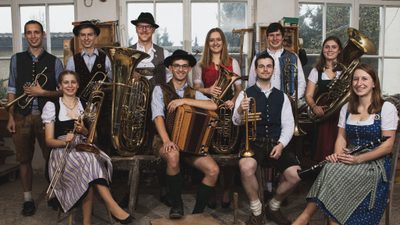
A brass band is a traditional musical ensemble that consists predominantly of wind instruments and has shaped cultural life in Germany, Austria, and Switzerland for centuries. Typical lineups include trumpet, trombone, tuba, clarinet, and saxophone, which are supplemented by drums and sometimes vocals to create a rich, full sound.
👉 Brass band terminology: the German "Blaskapelle" usually translates as brass band or wind band, reflecting the international significance of this musical tradition.
The diverse repertoire ranges from traditional marches, polkas, waltzes, and folk dances to modern pieces and popular Schlager hits, transforming every event into an unforgettable experience.
Brass band lineup – which instruments belong to it?
A professional brass band unites various instrument groups into a harmonious ensemble:
- Brass instruments: Trumpets, flugelhorns, horns, trombones, tubas
- Woodwinds: Clarinets, saxophones
- Percussion: Bass drum, snare drum, cymbals, percussion instruments
- Depending on formation, also vocals or accordion as special enhancement
Which instruments play in a brass band?
Mainly wind instruments (hence the characteristic name) – with larger formations, a complete drum set is added, laying the rhythmic foundation for the unmistakable sound.
The best artists for your event
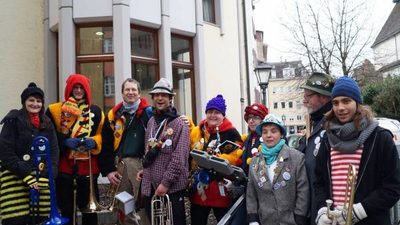
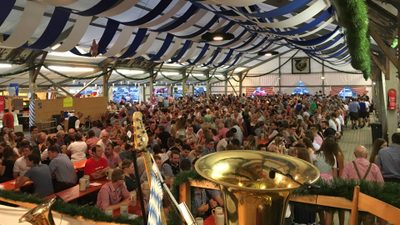
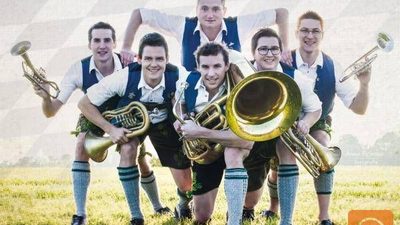
Booking the perfect artist for your event in 3 easy steps


Why brass bands are indispensable for festivals
Folk Festival Charm
The typical sound makes shooting festivals, fairs, and Oktoberfests unforgettable.
Diverse Music Styles
From traditional marches to popular brass band songs to modern entertainment music.
Authentic Experience
No recording can replace the energy of a real brass band.
Looking for live music for your event?
Describe your event in a few minutes — matching artists will get back to you. Free & non-binding.
Famous brass bands & names
In Germany, Austria, and Switzerland there are countless formations, e.g.:
Famous names:
Blaskapelle Gehörsturz (known for modern, energetic performances)
Blaskapelle Gloria, Blaskapelle Lüchtringen, Blaskapelle Höhenkirchen, Blaskapelle Tidirium, Blaskapelle Charivari
Regional formations:
Egertaler Blaskapelle, Wiggertaler Blaskapelle, Freudenberger Blaskapelle, Chisetaler Blaskapelle, Blaskapelle Petershausen or the Josef Menzl Blaskapelle
Popular media formats like the Antenne Bayern Blaskapelle have also promoted the cult status of this music genre.
History & Modernity of the brass band
Brass bands have been an integral part of brass music traditions in Bavaria, Austria, Bohemia, and Switzerland since the 19th century and have evolved into an indispensable cultural element. Many traditional folk festivals without the characteristic sound of a brass band are hardly imaginable today.
The modern repertoire showcases the impressive versatility of this musical genre: from classical marches to contemporary Pop hits and even powerful Rock interpretations. Events like the renowned Blaskapellentreffen Weinfelden impressively demonstrate how vibrant and dynamic today's brass band scene truly is.
Special applications
Brass bands are remarkably versatile — often more so than many organizers expect. Their classic fields of use are deeply rooted in regional tradition:
- Shooting festivals (Schützenfeste): Here a brass band is practically indispensable — it accompanies the processions, plays for the royal shooting contest and creates the right mood in the festival tent with marches, polka and waltz.
- Weddings and church festivities: A brass band outside the church or the registry office creates a festive, memorable reception. It is also a lovely choice for an open-air concert at the Polterabend or as a musical escort for the wedding procession.
- Private celebrations and milestone birthdays: A smaller brass band or a wind ensemble brings a sense of home and festivity to birthdays, anniversaries or club honours.
- City festivals, fairgrounds and Oktoberfest events: March music, polka, party hits and Bavarian classics — brass bands are a central part of the programme at city festivals and fairgrounds and reliably draw a crowd.
- Morning-pint gatherings, alpine cattle drives, summer parties: Classic repertoire in daylight, ideal for an audience that spans the generations.
Tips for organizers
If you want to book a brass band for your event, good preparation pays off:
- Ask early. Especially during the shooting-festival and Oktoberfest season, sought-after bands are booked up months in advance. Allow at least 4 to 6 months of lead time, and longer for large festivals.
- Agree on the repertoire clearly. Classic march music, traditional polka and waltz, modern brass repertoire, the Bohemian-Moravian style, hit songs and party numbers — the range is wide. Talk concretely with the bandleader about what suits your occasion, whether a parade or a carnival session.
- Plan for space and setup. Depending on the line-up, between 10 and 30 musicians — which means chairs, music stands, and possibly a stage and sound system are needed. For processions, the marching formation should be agreed in advance.
- Traditional dress and appearance: Many bands perform in traditional costume — this shapes the overall look and is a particularly good fit for fairgrounds and traditional events. On connactz you will find brass bands all across Germany.
How to find your brass band on connactz
With connactz you find the right brass band for your event in three steps:
- Choose your region. Brass bands are often regionally rooted — a band from nearby means shorter journeys, lower travel costs and usually more authentic local colour. Filter the search by your federal state or city.
- Compare profiles. Watch videos and listen to audio samples, check the repertoire details (march, polka, waltz, Bohemian-Moravian, modern), read reviews from previous organizers and note the line-up size. A smaller wind group suits a wedding better, while a full band belongs in the festival tent.
- Send a request and book directly. Through connactz you make contact easily, settle the date, fee, performance length and details such as traditional dress, and then conclude a binding contract. On connactz you will find brass bands all across Germany.
For musicians – present your brass band
Do you play in a brass band or lead one? With a profile on connactz you reach organizers all across Germany — from club committees and wedding couples to city-festival organizers and hospitality businesses.
How to make your profile strong:
- Upload photos and videos. Performances in traditional costume, morning-pint gatherings, the festival tent, processions — show the range of your engagements. Videos of live playing are especially convincing.
- Present your repertoire transparently. List classic marches, polka, waltz, Bohemian-Moravian repertoire, modern party hits and Schlager. A clear setlist helps organizers gauge straight away whether your band is a fit.
- Collect reviews. After every wedding, shooting festival and city festival, ask organizers for brief feedback. Positive reviews are the strongest trust signal.
- State the key facts clearly: line-up size, performance length, technical requirements, willingness to travel, fee range. The more transparent your profile, the better the requests.
)
)
)