
Rock 'n' Roll – The Captivating Music Legend That Changed the World
History & Development of Rock 'n' Roll Music
Roots
The roots of Rock 'n' Roll lie in the African American music styles of the early 20th century, particularly in rhythm and blues, gospel, and blues. Musicians like Chuck Berry, Little Richard, and Fats Domino combined these influences with elements from country and western swing to create a new, independent sound.
This musical fusion was an expression of cultural integration and brought forth a new form of entertainment that found great appeal especially among the young generation. The emergence of Rock 'n' Roll thus marks a decisive phase in music history that paved the way for later genres.
Important Decades
The 1950s are considered the birth of Rock 'n' Roll. In this decade, the music reached its first peak with artists like Elvis Presley, Buddy Holly, and Jerry Lee Lewis. The 60s brought further development with bands like The Beatles and The Rolling Stones, who enriched the style with their own influences.
In the 70s and 80s, Rock 'n' Roll continued to develop and influenced numerous subgenres such as hard rock and punk. Even today, the music is alive and is reinterpreted by modern artists, which underlines the timeless significance of this genre.
Regional Influences
Originally, Rock 'n' Roll emerged in the southern states of the USA, where various cultural currents met. African American music tradition played a central role, as did white country music. This mixture created a unique sound that quickly spread throughout America and later worldwide.
In Europe, Rock 'n' Roll became particularly popular in Great Britain, where bands like The Beatles and The Rolling Stones further developed the style and made it internationally known. Own interpretations also emerged in Germany and other countries, which illustrate the global influence of the genre.
Influence on/from Other Genres
Rock 'n' Roll has influenced numerous other music styles, including rock, pop, punk, and heavy metal. Many of these genres build on the typical rhythms and instrumentations of Rock 'n' Roll and expand them with their own stylistic means.
On the other hand, Rock 'n' Roll itself was influenced by blues, jazz, and country, which explains the diversity and complexity of the genre. This constant exchange between different music styles has made Rock 'n' Roll a dynamic and living culture.
Variants & Subgenres of Rock 'n' Roll Music
Rockabilly
One of the best-known variants of Rock 'n' Roll is the rockabilly style, which emerged in the 1950s. It combines Rock 'n' Roll with country elements and is characterized by a snappy rhythm, slap bass, and a clear vocal line. Famous representatives are artists like Elvis Presley in his early years and Carl Perkins.
Rockabilly is particularly known for its energetic live performances and the characteristic sound that is still cultivated by many enthusiasts today. The style has also developed its own dance culture that significantly influenced the rock n roll dance.
Surf Rock
Surf Rock is another subgenre form of Rock 'n' Roll that emerged in California in the 1960s. Characteristic are the fast guitar riffs with lots of reverb that convey the feeling of waves and beach. Bands like The Beach Boys and Dick Dale are the best-known representatives here.
This variant combines the classic Rock 'n' Roll rhythm with summery, sunny sounds and had a strong influence on the pop music of the 60s. Even today, surf rock is very popular with fans of vintage music.
Rock 'n' Roll Revival
In the 1980s and 90s, Rock 'n' Roll experienced a revival in which many bands and musicians took up the classic sound of the 50s again. This movement brought forth new bands that covered old hits or wrote their own songs in the style of traditional Rock 'n' Roll.
The revival helped ensure that Rock 'n' Roll did not fall into oblivion but could also inspire younger generations for the music. Often, elements of modern music styles were integrated to keep the sound contemporary.
Influence of Subgenres
The various subgenres of Rock 'n' Roll have enriched the genre and underlined its versatility. They show how flexible Rock 'n' Roll is and how it can adapt to different cultural and musical contexts.
Through this diversity, Rock 'n' Roll remains relevant and exciting – from the classic rock n roll songs of the 50s to modern interpretations that inspire audiences today.
The best artists for your event





Booking the perfect artist for your event in 3 easy steps


Famous Rock 'n' Roll Musicians, Singers and Bands
Elvis Presley
Elvis Presley is considered the King of Rock 'n' Roll and is one of the most famous Rock 'n' Roll singers of all time. His charismatic stage presence and unmistakable voice made him an icon of music history. With hits like „Jailhouse Rock" and „Hound Dog", he significantly shaped the 50s.
Elvis was not only a musician but also a cultural phenomenon that made Rock 'n' Roll known worldwide and inspired many subsequent artists. He is considered one of the most famous Rock'n'Roll musicians and has sustainably shaped the genre.
Chuck Berry
Chuck Berry is another legendary Rock n roll musician of the 50s who is considered one of the pioneers of the genre. His guitar technique and songwriting skills set new standards. Songs like „Johnny B. Goode" are among the best-known Rock n roll famous songs.
Berry influenced numerous musicians and contributed decisively to the development of Rock 'n' Roll. His music combines elements from blues and country and forms the basis of many modern rock styles.
Bands
In addition to solo artists, bands also played an important role in the development of Rock 'n' Roll. The Beatles and The Rolling Stones from Great Britain brought the sound to new glory in the 60s and combined it with their own influences. Their songs are classics today and have popularized Rock and Roll worldwide.
In the USA, groups like The Beach Boys contributed to further development, especially with surf rock. Bands remain a central part of Rock 'n' Roll Music to this day and shape the sound in diverse ways.
Other Acts
In addition to the big names, there are numerous other Rock'n'Roll artists and musicians who have enriched the genre. These include Buddy Holly, Little Richard, Jerry Lee Lewis, and many more, whose songs and styles sustainably influenced the Rock n roll dance and culture.
Even today, there are many musicians who have dedicated themselves to Rock 'n' Roll and keep the legacy of this music alive. Their work shows how diverse and inspiring the genre is.
Why a Rock 'n' Roll Band is a Good Choice
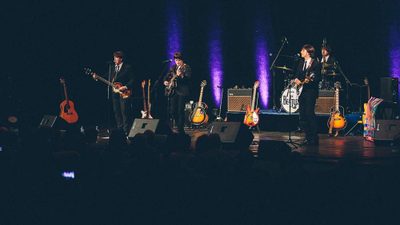
Rock 'n' roll is one of the most defining live-music languages of the 20th century — and still a reliable choice today when there is to be dancing and singing along at your event. Classics by Elvis Presley, Chuck Berry or Little Richard are known across the generations, and the characteristic rhythm (driving but at the same time danceable) brings very different age groups onto the dance floor together. A rock 'n' roll band brings this energy to life with drums, double bass or electric bass, guitar, often piano or saxophone, and a charismatic lead vocal.
For organizers, a rock 'n' roll band fits beautifully with vintage weddings, themed parties with a 50s or 60s connection, milestone birthdays, city and summer festivals, galas with a dance area, club balls and open airs. The music is instantly familiar and the tempo easy to control — many bands switch within a set between quiet ballads, classic rock 'n' roll numbers and twist/jive tunes.
Stylistically related are rockabilly, early beat music and boogie-woogie — many bands master several of these styles at once. On connactz you will find rock 'n' roll bands all across Germany — audio samples and videos show straight away how the sound and stage energy suit each event.
Rock 'n' Roll Today – Modern Bands, Singers & Media
Current Artists
Modern Rock 'n' Roll musicians reinterpret the genre and combine classic elements with contemporary sounds. Artists like The Stray Cats or Brian Setzer have revived and popularized the genre in recent decades. Younger bands also take up the style and bring fresh wind to the scene.
These current musicians show that Rock 'n' Roll is not just a relic of the past but remains a living and constantly evolving music style.
Bands in Europe / Worldwide
In Europe, there are numerous Rock 'n' Roll Bands that cultivate the classic sound and add their own accents. Especially in Germany, Great Britain, and France, the scene is active and diverse. Worldwide, there are also many bands that adapt and further develop the American style.
This global spread shows the universal appeal of Rock 'n' Roll and how it inspires people of different cultures.
Streaming & YouTube
Thanks to modern media like streaming services and YouTube, Rock 'n' Roll Music is available anytime and anywhere. Platforms offer both classic Rock n roll songs from the 50s and 60s and new productions by modern artists.
This accessibility promotes the spread of the genre and enables fans to discover and share their favorite music. This keeps Rock 'n' Roll digitally alive and relevant.
Rock 'n' Roll for Events & Booking a Rock 'n' Roll Band
Weddings
A Rock 'n' Roll Band is an excellent choice for weddings that want to create a lively and carefree atmosphere. The captivating rhythm and well-known hits create mood and invite dancing. Many couples choose Rock 'n' Roll to make their celebration unforgettable.
The combination of classic sound and modern performance makes Rock 'n' Roll a timeless option for the most beautiful day of life.
Corporate Events / Galas
At corporate events and galas, a Rock 'n' Roll Band with a charismatic singer also creates a special mood. The music loosens the atmosphere, gets guests dancing, and promotes team spirit. With a varied repertoire of Rock n roll famous songs, there is something for every taste.
Professional bands adapt their program individually to the event and ensure smooth execution, so the event remains in best memory.
Festivals / Summer Festivals
At festivals and summer parties, Rock 'n' Roll is particularly popular, as the music offers the perfect mix of energy and nostalgia. Live performances by a rock 'n' roll band attract a broad audience and create a carefree mood.
The combination of dance, good mood, and well-known songs makes Rock 'n' Roll a highlight at any open-air event.
How to Book a Rock 'n' Roll Band
Booking a Rock 'n' Roll Band is straightforward: Inform yourself about available bands, listen to demos, and clarify details such as lineup, repertoire, and prices. Many bands offer tailored programs that are precisely tailored to your event.
Early planning is recommended to secure the desired date and ensure smooth organization. This way, nothing stands in the way of an unforgettable event with Rock 'n' Roll.
Costs & Planning for a Rock 'n' Roll Band
Price Factors
The costs for a Rock 'n' Roll Band depend on various factors, including the size of the band, the duration of the performance, the distance to the venue, and the technical equipment. The fame of the musicians also plays a role.
Additionally, extras like lighting and sound technology or special song requests can influence the price. Transparent communication before booking is therefore important to avoid surprises.
Budget Examples
For smaller private celebrations, a Rock 'n' Roll Band can already be booked from a few hundred euros. For larger events with professional lineup and extensive program, prices are often in the four-figure range.
It is worth obtaining various offers and comparing the services precisely to find the best price-performance ratio while ensuring quality.
Band vs. DJ
The decision between a live band and a DJ depends on the desired ambiance. A Rock 'n' Roll Band offers an authentic live experience with direct contact to the audience and individual performance. DJs, on the other hand, are more flexible in music selection and often more cost-effective.
For events that value mood, interaction, and musical quality, a live band is usually the better choice, especially when Rock 'n' Roll Music is in focus.
Looking for live music for your event?
Describe your event in a few minutes — matching artists will get back to you. Free & non-binding.
Popular searches for Rock n Roll
Smaller line-ups are popular too, such as Rock n Roll Band and Rock n Roll Duo.
)
)
)